[ Feature ]
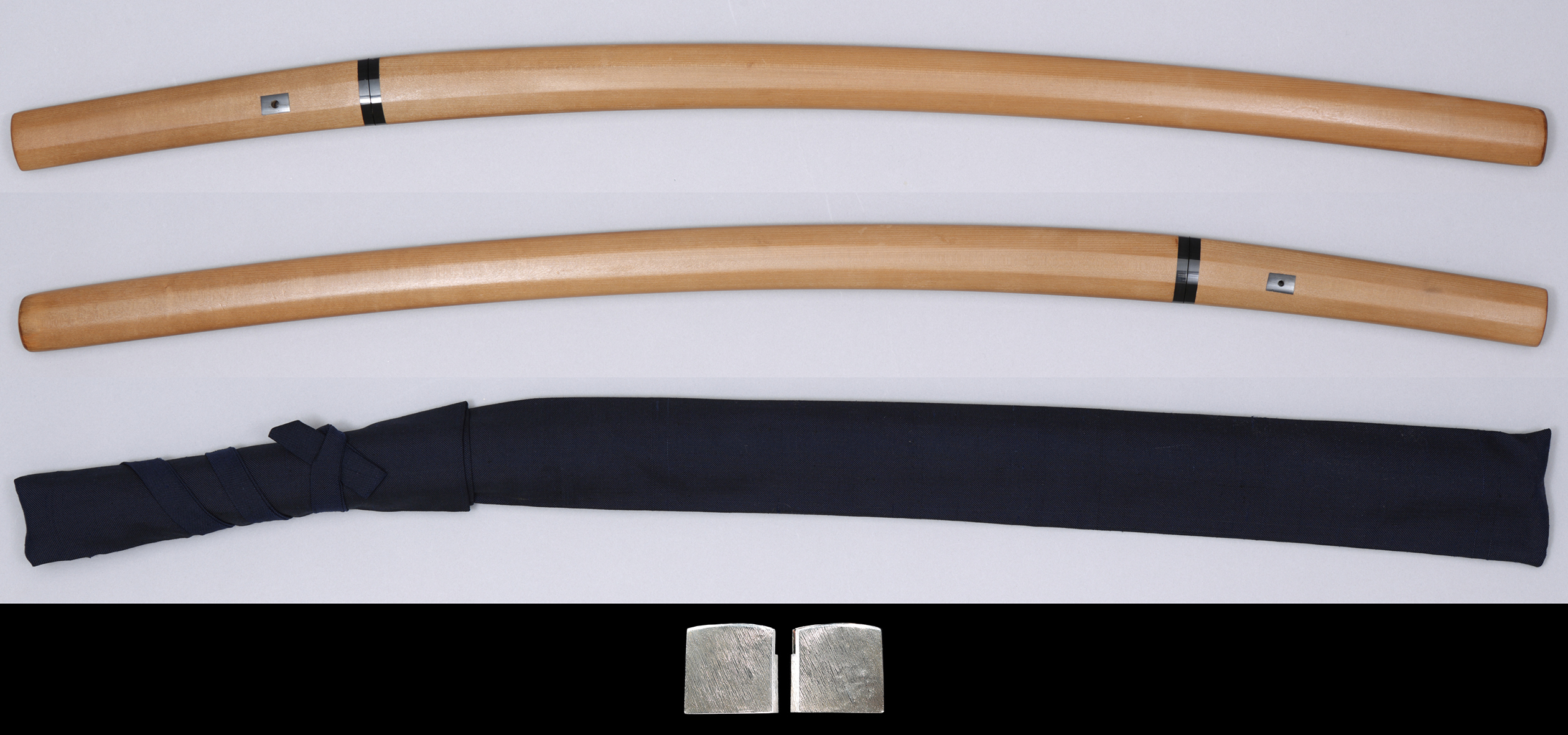
Form : The blade features a hira-zukuri construction with an an-mune profile, standard width and thickness, a taper from base to tip, a pronounced high waist curve, and a chū-kirisaki point.
Nakago : The nakago tang shows slight polishing, diagonal file marks, a kiri cut tip, and two mekugi holes.
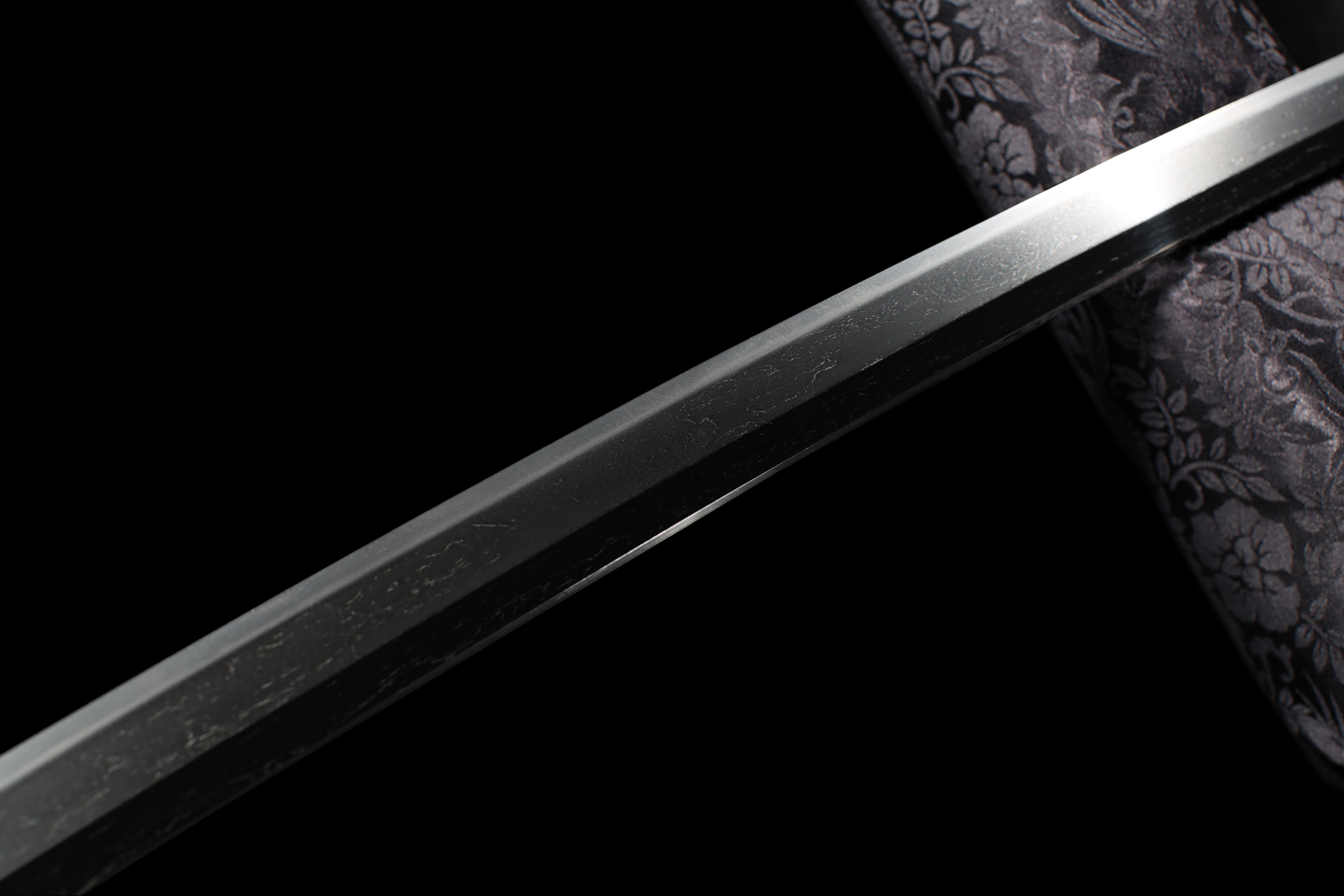
Jigane : The jigane (base metal) exhibits itema and mokume, a board grain with mottled patterns, a flowing texture with some graininess, and a slightly raised surface. Fine ji-nie (grain-like inclusions) are present, with chikei (ground pattern) appearing faintly.
Hamon : The hamon (temper line) is in the nao-ha (straight blade) style, interspersed with small mutsu-no-me (interlocking patterns), featuring well-defined small ashi (foot-like patterns) and ha (leaf-like patterns), accompanied by small nie (fine inclusions), with kin-suji (gold lines) and sunagari (sand-like flow) appearing.
Boushi : The boshi (tip grained pattern) curves slightly, returning to a small maru (round) shape.
[ Highlight ] This is a signed tachi by the late Kamakura period swordsmith Nagasue of Osafune, Bizen Province, dating from around the Tokuji era. It is a splendid example displaying a classical form with a pronounced waist curve and firm stance. Nagamatsu is recorded in the Meikan as ‘Tarō-taifu’, suggesting he was a smith bearing a title considered a form of honorific. He inscribed his work as ‘Bishū Osafune-zumi Nagamatsu’ or simply ‘Nagamatsu’. This piece displays a deeply nuanced, fine-grained straight-haired pattern (sugu-ha) with small interlocking grains (komoku-me), small feet (kōashi), and leaf-like patterns (yo), complemented by finely detailed hamon features such as kin-suji (gold lines) and sunagurashi (sand-flow). While purely speculative, similarities exist with works attributed to Nagamoto – said to be a proxy or collaborator for Nagamitsu, the chief master of the Osafune school – such as the gentle tachi form, the forging combining board grain with mottled grain, and the calm, straight-edged hamon with its gently active blade pattern. The connection between the characters “元” (Moto) and “末” (Sue) in the signatures also suggests a possible lineage link. Like Nagamoto, extant works by Nagasue are rare, making this an intriguing piece.
[ Conditions ] Excellent.

![Form : The blade features a hira-zukuri construction with an an-mune profile, standard width and thickness, a taper from base to tip, a pronounced high waist curve, and a chū-kirisaki point.
Nakago : The nakago tang shows slight polishing, diagonal file marks, a kiri cut tip, and two mekugi holes.
Jigane : The jigane (base metal) exhibits itema and mokume, a board grain with mottled patterns, a flowing texture with some graininess, and a slightly raised surface. Fine ji-nie (grain-like inclusions) are present, with chikei (ground pattern) appearing faintly.
Hamon : The hamon (temper line) is in the nao-ha (straight blade) style, interspersed with small mutsu-no-me (interlocking patterns), featuring well-defined small ashi (foot-like patterns) and ha (leaf-like patterns), accompanied by small nie (fine inclusions), with kin-suji (gold lines) and sunagari (sand-like flow) appearing.
Boushi : The boshi (tip grained pattern) curves slightly, returning to a small maru (round) shape.
[ Highlight ] This is a signed tachi by the late Kamakura period swordsmith Nagasue of Osafune, Bizen Province, dating from around the Tokuji era. It is a splendid example displaying a classical form with a pronounced waist curve and firm stance. Nagamatsu is recorded in the Meikan as ‘Tarō-taifu’, suggesting he was a smith bearing a title considered a form of honorific. He inscribed his work as ‘Bishū Osafune-zumi Nagamatsu’ or simply ‘Nagamatsu’. This piece displays a deeply nuanced, fine-grained straight-haired pattern (sugu-ha) with small interlocking grains (komoku-me), small feet (kōashi), and leaf-like patterns (yo), complemented by finely detailed hamon features such as kin-suji (gold lines) and sunagurashi (sand-flow). While purely speculative, similarities exist with works attributed to Nagamoto – said to be a proxy or collaborator for Nagamitsu, the chief master of the Osafune school – such as the gentle tachi form, the forging combining board grain with mottled grain, and the calm, straight-edged hamon with its gently active blade pattern. The connection between the characters “元” (Moto) and “末” (Sue) in the signatures also suggests a possible lineage link. Like Nagamoto, extant works by Nagasue are rare, making this an intriguing piece.](image/A011125-2.jpg)
